About Diageo, the corporate brand
Diageo is a British multinational alcoholic beverages company. The name was uniquely invented and is composed of Latin and Greek words meaning day and world respectively. This was done with the aim of referencing the company slogan – “Celebrating Life, Every Day, Everywhere”. With headquarters in London, England and offices in six countries, Diageo is a corporate brand that seems to enjoy the multiple brand legs they stand on in the market.
The brands within the brand…
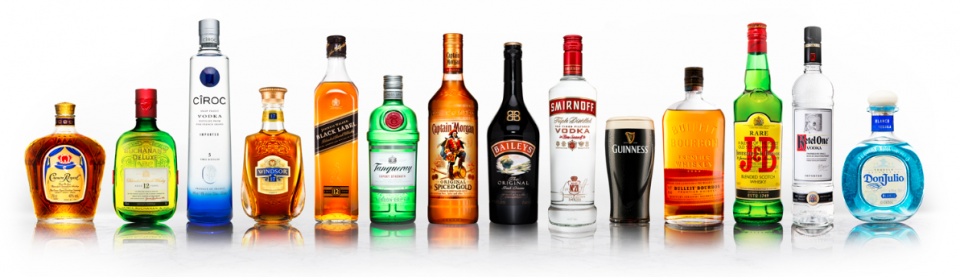
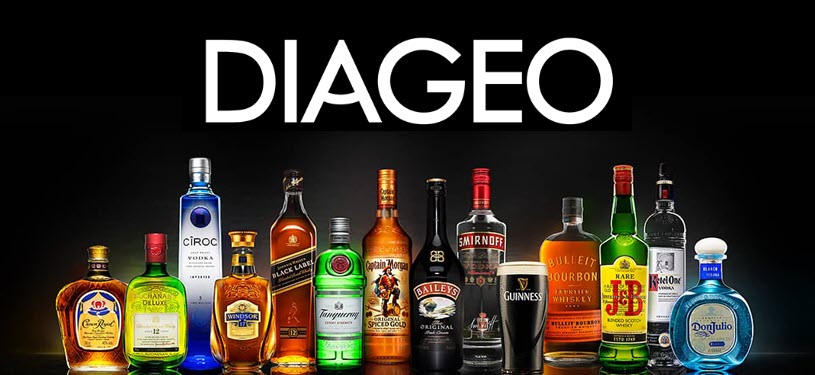
The Diageo brand house boasts an outstanding collection of individual brands across 180 countries. Old and new, global and local, Diageo claims to have a portfolio with a breadth that is second to none.
“Our brands are crafted, authentic, relevant, luxury, with something for every taste and celebration, big or small” [i]
– Diageo
Some of the most famous brands from the Diageo portfolio include:
- Scotch whisky: Black & White, Buchanan’s, J&B, Johnnie Walker, Grand Old Parr, Lagavulin, The Singleton, Talisker and Windsor.
- Other whisk(e)y: Bulleit and Crown Royal.
- Vodka: Cîroc, Ketel One and Smirnoff.
- Rum: Bundaberg, Captain Morgan, Ron Zacapa.
- Liqueur: Baileys.
- Tequila: Casamigos and Don Julio.
- Gin: Gordon’s and Tanqueray.
- Local spirits: McDowell’s, Shui Jing Fang, Yeni Raki and Ypióca.
- Beer: Guinness.
Managing a corporate brand is tough, and we can only imagine just how much tougher it is when you are a brand house with so many individual brands. So, how do they navigate the challenges of managing a corporate brand?
Maintaining relevance
With an age-old history behind them, each brand has the responsibility to maintain their premium promise. After all, they are led by the legacy of premium distillery. The brands within the Diageo brand stable need to bring to life “Celebrating Life, Every Day, Everywhere”.
Value propositions
Every brand represents a distinct promise and every brand you have under your stable adds to the promise basket. The cherry on top for Diageo on this one is that at the base of each brand’s promise, there is a vow to giving the consumer a premium product and experience. And that is exactly what every product brand under the Diageo house of brands brings to the table – premium products.
Contexts
Although the products compete with each other somewhere in the market, they are also not necessarily direct competitors in that they cater to a specific market. The brand teams that work on the various brand divisions know and understand that at the end of the day, it is about a premium consumption experience for the consumer – if there is anything to compete for, it’s that and bring that promise to life stronger.
Avoiding negativity
Operating in so many different countries and consumer environments cannot be easy, especially for globally known brands. It is thus important for the brand teams to keep their fingers on the pulse at all times to avoid cross-pollination of brand negativity across the stable and the areas of operation.
For a brand that houses so many individual brands, it is important for Diageo to carefully and strategically navigate the challenges of managing a brand. The strength, credibility sales and overall identity of the individual brands, as well as the bigger brand depend on it.
But, How many is ‘too many’?
The fewer the brands the better for the brand company, or at least one would think. This way, there is less noise to filter through and less translation or dilutions of the overarching brand message. The big question is, “Are all these brands possibly too much for the Diageo brand to manage?”
In our opinion, they are treading on a fine line on this one – the variety serves them well and affords them many seats at the table. However, there’s that small chance that they are not fully occupying all the right seats in certain markets, and their difficulty in moving stock in certain regions may speak to this. It’s all good and well to have options, but it may serve your brand better to understand where to open up which brands based on the market viability and how much of it to unlock. This way, they can focus on the presence of those core individual brands and saturate the message less across all the fields. This may just add to their premium and exclusive brand characteristic.